So, what exactly is a headshot? At its core, it’s a photograph of a person, usually from the shoulders up, that’s all about showcasing your personality and professionalism. It’s your digital handshake—the image that introduces you to recruiters, clients, and colleagues before you ever say a word.
Your Professional First Impression
Think of your headshot as the cornerstone of your professional image. It's not just another picture; it’s a powerful communication tool working for you around the clock. A truly great headshot does more than just show what you look like. It projects confidence, warmth, and approachability, building a foundation of trust before you've even met.
More Than Just a Picture
Getting a handle on what makes a headshot effective is the first step in shaping how you're perceived online. It's essential if you want to build a strong personal brand on LinkedIn, where the right image can make a huge difference in your networking. This isn't just a niche idea, either—it's big business.
The demand for professional headshots has exploded into a massive industry. It’s now a multi-billion dollar segment of the global economy, estimated at roughly $2.5 billion in 2023. A huge part of that growth comes from platforms like LinkedIn, which boasts over 900 million members who all need a profile picture. You can see more on this market at dataintelo.com.
This single, strategic image is your visual introduction to the professional world. Whether you’re using it for a corporate website, a social media profile, or even a creative avatar, its job is always the same: to connect with people and communicate who you are. To see how photos can be transformed into unique styles, you can find more inspiration on the AnimePhoto.ai blog.
Headshots vs. Portraits: What's the Real Difference?
It’s easy to see why people often use "headshot" and "portrait" as if they mean the same thing, but in the world of photography, they serve two very different functions. The simplest way to think about it is this: a headshot is your professional handshake, while a portrait is a window into your story.
One is designed for a specific job—to introduce you clearly and confidently. The other is all about capturing a mood, a feeling, or a moment in time.
The most immediate difference you'll notice is the crop. A traditional headshot is framed tightly, typically from the shoulders up. Everything in the frame is there to draw attention directly to your face and expression, creating a sense of connection and trust. A portrait, on the other hand, has much more creative leeway. It could be a full-body shot, feature interesting props, or place you in a compelling environment to tell a bigger story.
Intent Is Everything
At its core, the distinction comes down to purpose. A headshot is a practical, functional tool for your career. You'll use it for your LinkedIn profile, the company website's "About Us" page, or a speaker bio for an upcoming conference. Its success is measured by how well it communicates professionalism and approachability.
Portraits are less about function and more about expression. They're perfect for personal branding campaigns, artistic projects, or simply capturing a significant chapter in your life.
A headshot is built for communication; its job is to connect with an audience quickly and clearly. A portrait is built for expression; it invites the audience to interpret a story or emotion.
This simple diagram breaks down how a headshot works to blend your professional side with your unique personality, all to build that crucial element of trust.
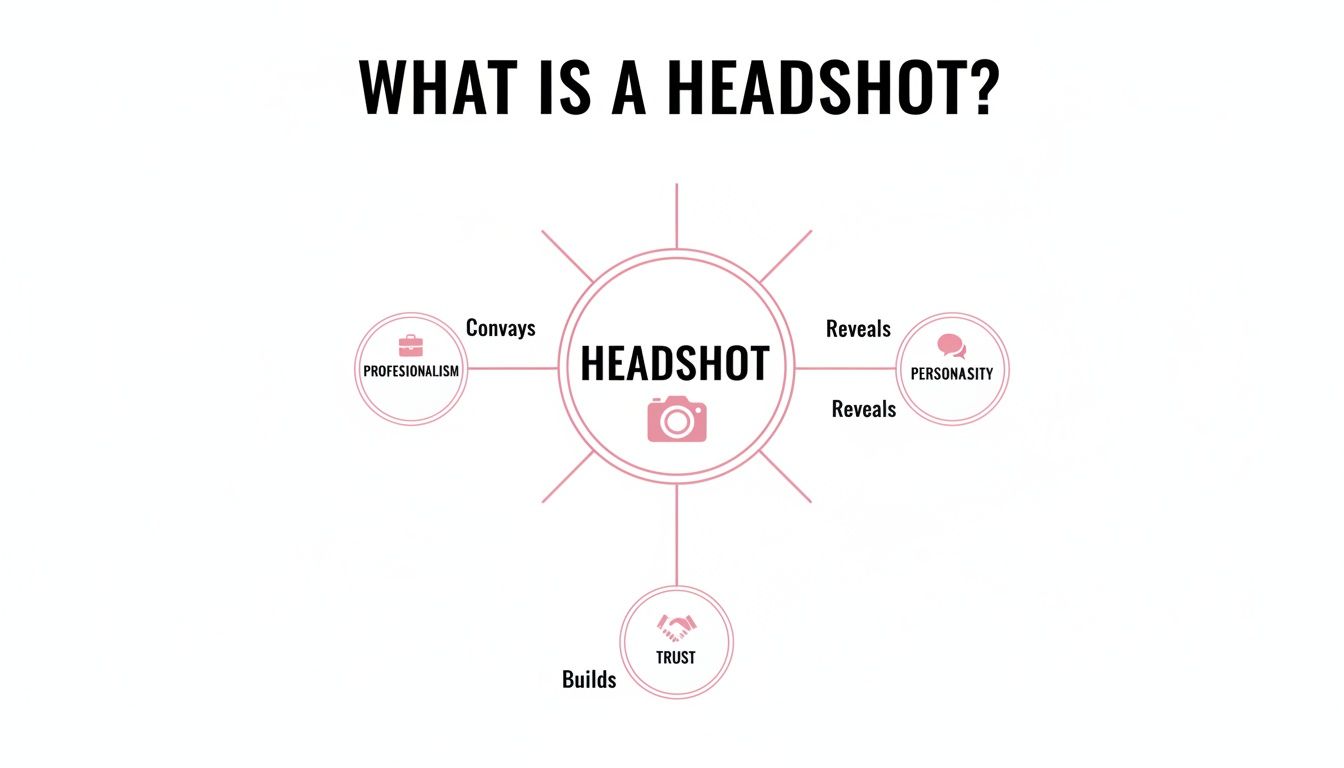
To make it even clearer, let's break down the primary distinctions side-by-side.
Headshot vs Portrait Key Distinctions
| Characteristic | Headshot | Portrait |
|---|---|---|
| Primary Goal | To provide a clear, professional representation for business or casting. | To capture personality, emotion, or tell a story in an artistic way. |
| Framing | Tightly cropped from the shoulders or chest up. | Can be wide, full-body, or environmental. Composition is flexible. |
| Focus | Directly on the subject's face and expression. | Can be on the subject, the environment, a mood, or a specific detail. |
| Background | Usually simple and non-distracting (neutral or solid color). | Often part of the story; can be a specific location or stylized backdrop. |
| Common Uses | LinkedIn, résumés, corporate websites, actor/model portfolios, author bios. | Personal branding, family photos, editorial features, artistic display. |
Ultimately, choosing the right photo comes down to one question: What job does this image need to do? If you need a straightforward, professional introduction, you absolutely need a headshot. If you're looking to tell a more nuanced story, then a portrait is the way to go.
Where to Use Your Professional Headshot for Maximum Impact

A great headshot is so much more than just a nice picture—it's one of the most powerful tools in your personal branding toolkit. Knowing exactly where to use it helps you project a consistent, professional image across every platform you're on, making sure you get the most out of your investment.
The first and most important place for your headshot is your LinkedIn profile. Think of it as your digital handshake. For recruiters, potential clients, and industry peers, a polished photo builds immediate credibility and makes you seem more approachable before they even read a single word of your profile.
Once LinkedIn is covered, your headshot should appear anywhere your professional reputation is front and center.
- Corporate Websites: A sharp headshot on a company's "About Us" or team page helps put a face to the name, making the entire organization feel more human and connected.
- Email Signatures: Popping your photo into your email signature makes every message feel more personal and helps people remember you.
- Social Media Avatars: Using the same professional picture on platforms like X (formerly Twitter) or other industry forums creates a recognizable brand for yourself.
Expanding Your Professional Reach
With the basics in place, you can start using your headshot more strategically to cement your status as an expert in your field. These are the spots where your image often accompanies a significant professional achievement or opportunity.
For example, a high-quality headshot is absolutely essential for:
- Speaker Bios: If you're giving a talk at a conference or hosting a webinar, your headshot will be all over the promotional materials. It's what gives your profile that extra dose of authority.
- Author Pages: Whether you’ve written a book, published a guest article, or contributed to a company report, your photo goes right next to your name.
- Press Releases & Media Kits: When your company has big news to share, having a professional headshot ready ensures the media represents you accurately and professionally.
A consistent, professional headshot photo creates a seamless visual identity. It tells a cohesive story about who you are, no matter where someone encounters you online, building recognition and trust at every touchpoint.
That consistency is everything. Even if you want to create more stylized versions for different contexts, like a unique AI-generated avatar, you need a strong original photo to start with. You can see how a good picture can be adapted for fun by exploring anime-style transformations at https://animephoto.ai.
The Anatomy of a Powerful Headshot
So, what’s the secret sauce that turns a simple picture into a headshot that gets you noticed? It's not one single thing. It’s a mix of five key ingredients, all working together to craft a first impression that feels both professional and genuinely you.
When you break it down, there’s a clear framework for what makes a headshot connect.
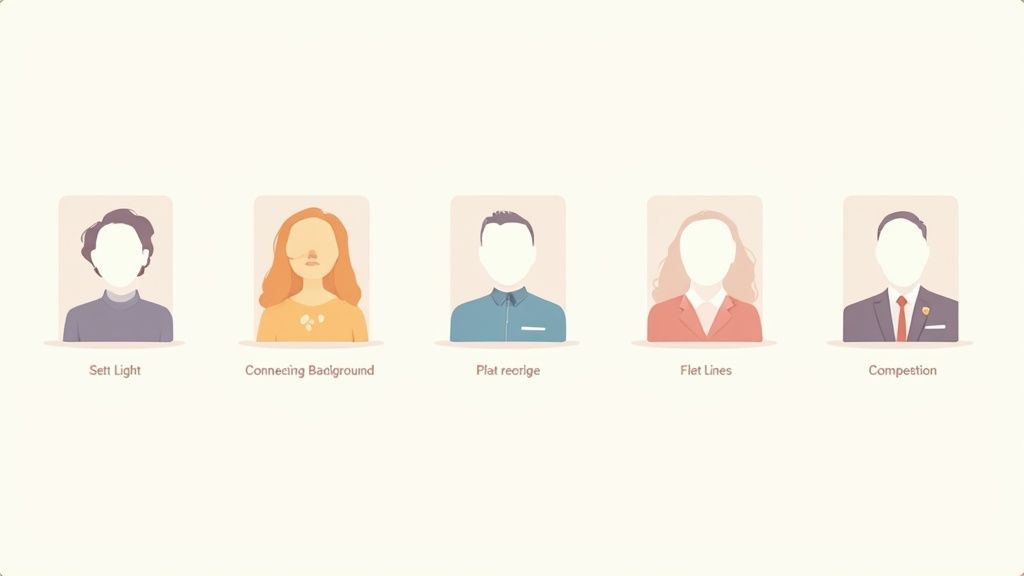
Let's start with lighting, because it’s a total game-changer. Good light literally shapes your face for the camera. Soft, diffused light—think of the gentle light from a large window on a cloudy day—is your best friend. It smooths everything out, gets rid of harsh shadows, and gives you a clean, polished look. Bad lighting, on the other hand, can completely hide your best features or create a mood you never intended.
Next up is your expression. This is where you make a human connection. Your headshot needs to broadcast the right vibe for your field, whether that's warm and trustworthy, sharp and authoritative, or bold and creative. The key is authenticity. A fake, plastered-on smile is a dead giveaway and can instantly make people wary.
Putting It All Together
The background has just one job: to keep the focus on you. Simple, clean, and uncluttered is almost always the right move. A solid neutral color, a softly blurred outdoor setting, or a subtle texture all work beautifully. If the background is too busy, it’s just noise that pulls attention away from your face.
Composition and cropping matter more than you think. A classic headshot is typically cropped somewhere from the chest or shoulders up. This puts your face front and center, which is exactly the point. Photographers often use the "rule of thirds," placing your eyes slightly off-center to create a more engaging, balanced photo that naturally pulls the viewer in.
A great headshot is a strategic tool where every element—from the glimmer in your eye to the color of your shirt—is chosen with intent. It’s a deliberate craft, not an accidental snapshot.
Finally, let’s talk about your attire. What you wear speaks volumes about your personal brand before you even say a word. Your outfit should be professional, fit you well, and match the industry you're in. Solid colors are a much safer bet than busy patterns, which can look distracting on camera.
Choosing what to wear can be tricky, but it's a crucial piece of the puzzle. If you need some ideas, this guide on what to wear for your headshot is a great resource.
Ultimately, these five elements—lighting, expression, background, composition, and attire—are the building blocks of an unforgettable headshot.
Common Headshot Mistakes and How to Avoid Them
You've worked hard to build your professional reputation, but a bad headshot can unintentionally sabotage it in seconds. In many cases, a poor photo is actually worse than having no photo at all because it can signal a lack of attention to detail.
Steering clear of a few common pitfalls will ensure your headshot helps, not hurts, your personal brand.
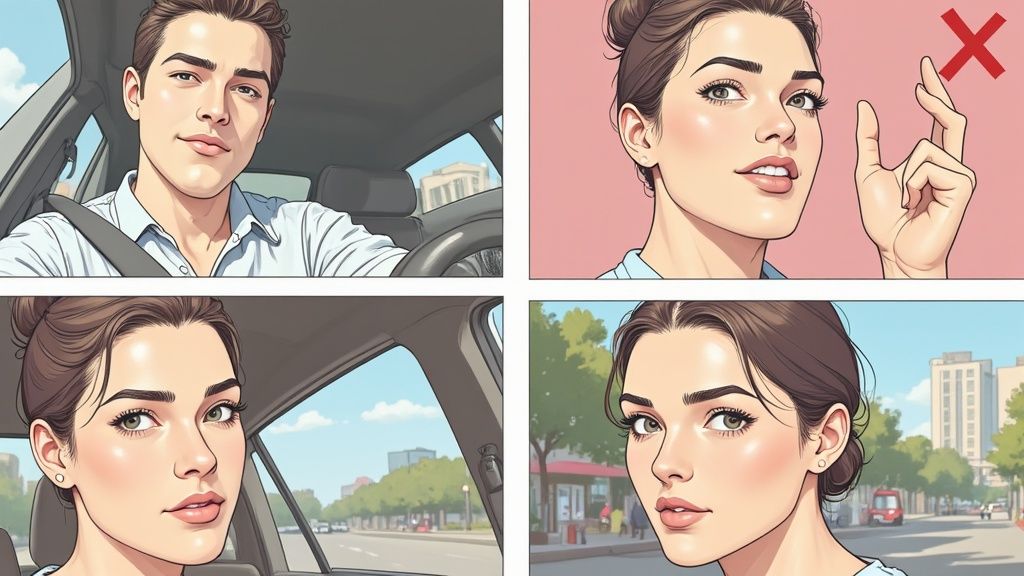
The number one mistake I see is using an outdated photo. If your picture is more than five years old, it's not a true representation of you anymore. This creates a jarring moment when you finally meet someone in person, which can quietly chip away at the trust you're trying to build.
Another huge misstep is a distracting background. Remember, the headshot is about you, not the scenery behind you.
Top Distractions to Avoid
- Busy offices or public spaces where other people or random objects steal the spotlight.
- Car interiors. These almost always look unprofessional and like a last-minute selfie.
- Messy rooms or cluttered home environments, which can unfortunately suggest disorganization.
Bad lighting is another classic offender. Harsh shadows can hide your best features or, worse, make you look exhausted and unapproachable. You want soft, even light that flatters your face. Your wardrobe choice is just as important—overly casual outfits, loud patterns, or big logos pull focus from what really matters.
The goal of a headshot is clear and authentic communication. Anything that distracts from your face—be it a busy background, unflattering light, or an old photo—weakens that communication.
Finally, don't go overboard with the editing. A little bit of retouching is perfectly fine, but heavy-handed smoothing or altering your features will just make the photo look fake. Authenticity is always the better choice.
A Few Common Questions About Headshots
Once you get into the world of professional headshots, a few practical questions always seem to pop up. How much should I spend? How often do I need a new one? Let's clear up some of the most common queries so you can get the most out of your professional image.
How Often Should I Update My Headshot?
Think of your headshot as a visual handshake. It needs to look like you, right now. A good general rule is to get a new one every two to three years.
Of course, life happens. If you make a major change to your appearance—like a completely new hairstyle, a different hair color, or you start wearing glasses—it's time for an update. You don't want someone to meet you in person and have that split second of confusion because your photo is out of date. Keeping it current builds trust from the very first impression.
How Much Does a Professional Headshot Cost?
This is a classic "it depends" situation. The price for a professional headshot session can swing pretty wildly based on the photographer's reputation, your city, and how many photos you're getting.
You can find basic sessions in major cities starting around $75–$150 for a single polished image. For more involved studio sessions with multiple looks and retouched photos, you’re more likely looking at a range of $300 to over $1,200. The demand for this is growing, and you can dig into the market trends over on futuremarketreport.com if you're curious.
Can I Use My Headshot as an Avatar?
Yes, you absolutely should! Your headshot is the perfect avatar for professional platforms like LinkedIn, company directories, or industry forums. It builds a consistent, recognizable identity that reinforces your brand wherever you show up online.
And it doesn't have to stop there. Many people get creative and use their headshot as a starting point for unique AI avatars. If that sounds like fun, you can check out our AnimePhoto.ai pricing to see how you can take a standard photo and turn it into something completely new.
A great headshot isn’t just for your LinkedIn profile; it’s a versatile asset. Think of it as your universal key for professional recognition across all digital platforms, from email signatures to speaker bios.
Ready to create a standout avatar from your favorite photo? At AnimePhoto.ai, we make it easy to transform any picture into a unique, anime-style masterpiece. Get started in seconds!

See yourself in anime style in under a minute
Pick a style, upload a photo, and get a high-quality anime portrait ready for profiles, prints and gifts.
Create your anime photo